

Hospitals have demanding hot water requirements because many departments operate continuously. Patient areas, kitchens, laundries, housekeeping facilities, staff areas, and certain sanitation processes may all require dependable access to heated water.
For healthcare facilities evaluating alternatives to conventional heating, hospital heat pump systems can provide an energy-efficient solution for suitable hot water applications.
Why Hospital Hot Water Demand Is Different
Unlike many commercial buildings, hospitals rarely follow a simple morning-and-evening consumption pattern. Hot water can be required throughout the day and night.
Demand may come from:
- Patient rooms
- Washrooms
- Hospital kitchens
- Laundry facilities
- Housekeeping departments
- Staff facilities
- Certain cleaning and sanitation processes
This makes accurate load assessment essential.
How Heat Pumps Can Help
Heat pumps transfer environmental heat into water using a refrigeration cycle. This operating principle can reduce dependence on direct resistance heating for applications where the required temperature falls within the selected system's operating range.
However, hospitals should evaluate heat pumps as part of the overall hot water infrastructure rather than as isolated equipment.
Storage and Backup Planning
Reliable hospital systems require careful consideration of peak demand and continuity.
A practical design may incorporate insulated hot water storage so that sufficient heated water remains available during high-demand periods. Depending on the facility's requirements, existing boilers or heaters may also be retained as backup or supplementary systems.
Redundancy can be particularly valuable where interruption of hot water supply would disrupt operations.
Important Selection Factors
Before choosing a heat pump, facility teams should assess:
- Required outlet temperature
- Daily hot water consumption
- Peak hourly demand
- Storage capacity
- Water quality
- Ambient operating conditions
- Installation space
- Existing heating infrastructure
- Maintenance accessibility
These details determine whether a proposed system can satisfy real operating conditions.
Hospital Applications in Mumbai
Healthcare facilities across Mumbai and Maharashtra face increasing pressure to manage energy consumption while maintaining dependable building services.
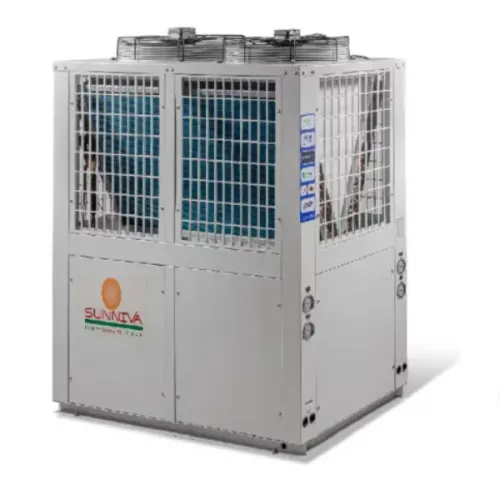
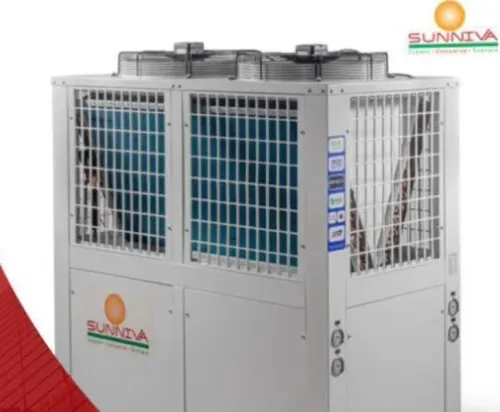
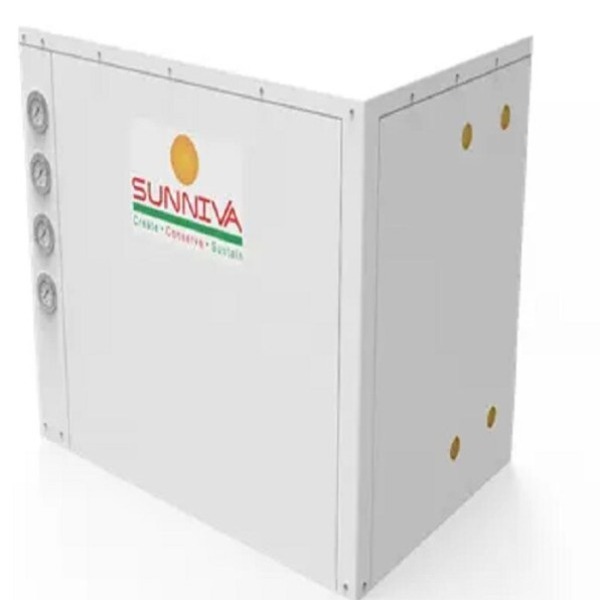
Sunniva Heatpumps manufactures commercial heat pump systems that can be configured according to facility-specific heating loads and operating requirements.
For hospitals, efficiency should never be evaluated independently from reliability. The better approach is to design the heat pump, storage system, controls, circulation arrangement, and backup capacity as one coordinated hot water system.
When those elements are properly engineered, heat pumps can become a practical component of a hospital's broader energy-management strategy.