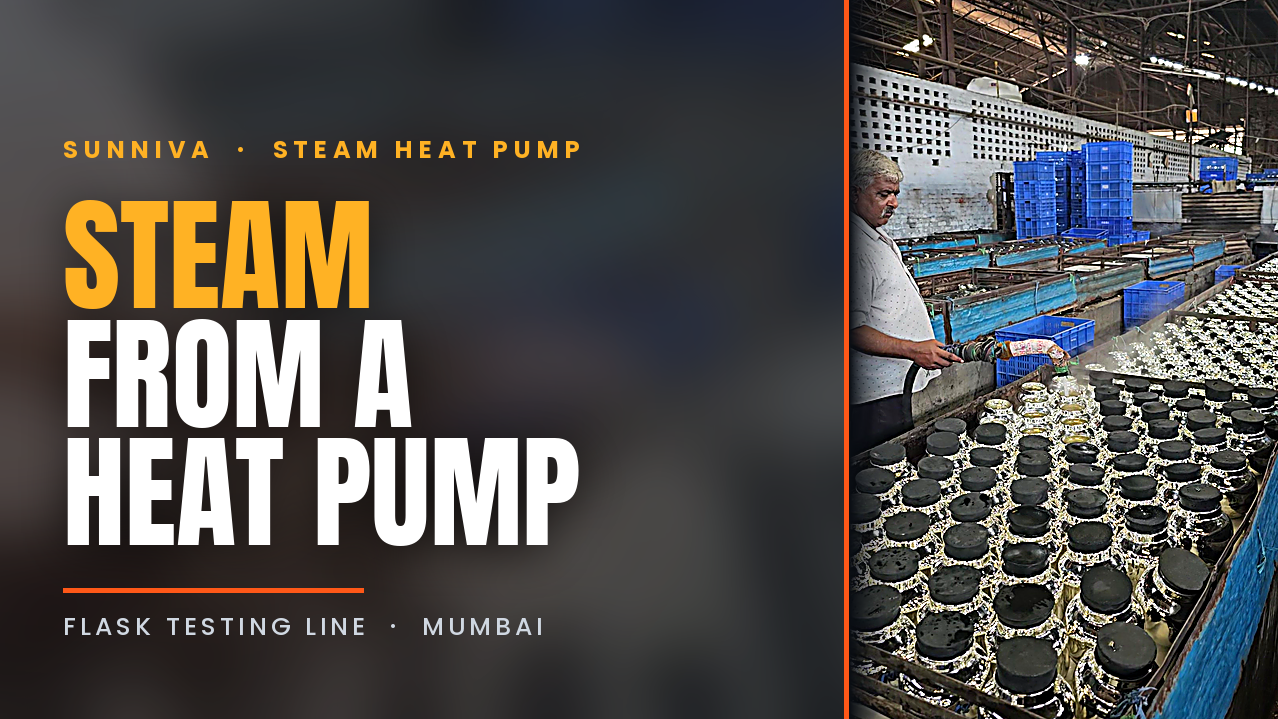
Case Study: High-Temperature Heat Pump for Vacuum Flask Quality Testing
The Challenge
Every vacuum flask that rolls off a production line has to prove itself before it ships. Manufacturers fill each unit with near-boiling water and monitor it over time — checking that the vacuum insulation is holding, that there are no leaks in the seal, and that the flask retains heat to spec. This isn't a one-time test; it runs continuously through every production shift, which means the plant needs a steady, uninterrupted supply of hot water at a consistent temperature, batch after batch, day after day.
Most flask manufacturers meet this demand the conventional way — a boiler or a bank of electric immersion heaters running continuously to keep hot water on tap. Both come with real operating costs: boilers need fuel storage, handling, and combustion licensing/compliance; electric heaters draw high loads at a poor cost-per-litre. Either way, temperature consistency can drift, which is a problem when the test itself depends on repeatable conditions.
The Solution
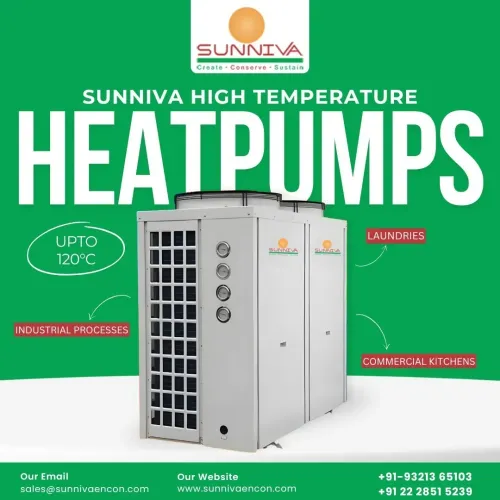
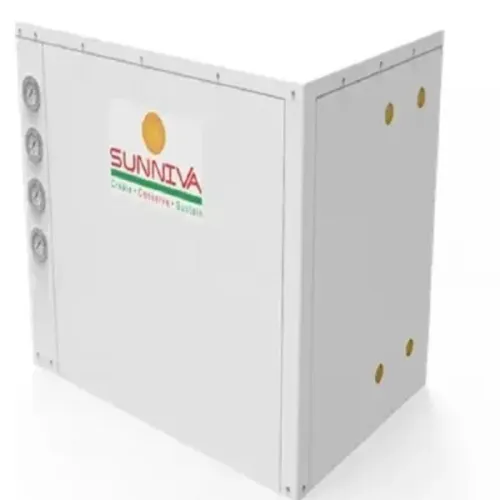
In this plant, that hot water is now supplied by a Sunniva high-temperature heat pump instead of a boiler or electric heater bank. The system delivers hot water at up to 120°C — hot enough to meet the flask-testing requirement directly — while drawing a fraction of the energy that direct electric or fuel-fired heating would need for the same output. Because it's a heat pump, it moves heat rather than generating it from resistive or combustion sources, which is where the bulk of the running-cost savings comes from.
Why It Works for This Application
- Continuous, on-demand supply — hot water is available throughout the full shift without cycling delays or recovery lag, matching the pace of a moving production line.
- No fuel handling or flue — eliminates fuel storage, combustion by-products, and the boiler licensing/compliance overhead that comes with fired heating systems.
- Lower cost per litre — heat pump COP (coefficient of performance) means significantly less input energy is needed to deliver the same volume of hot water at temperature, compared to electric resistance heating or fuel combustion.
- Stable, repeatable temperature — tight temperature control means every flask is tested under the same conditions, so quality data is comparable batch to batch — important when heat-retention testing is itself a precision measurement.
About Sunniva Encon LLP
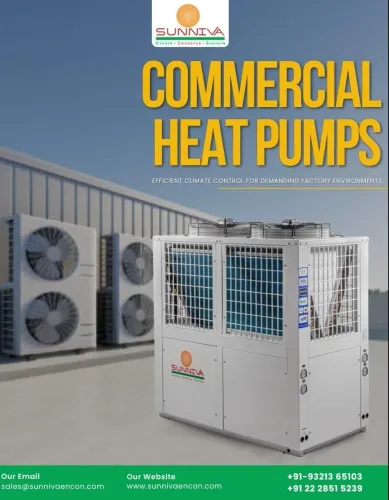
Sunniva Encon LLP manufactures industrial and commercial heat pumps in Mumbai, serving process heating, hot water, and drying applications across textiles, food processing, hospitality, and manufacturing. Based in Goregaon West, Mumbai — sunnivaencon.com.
Manufacturers currently running a boiler or electric heater for process hot water can get in touch with Sunniva to find out what a heat pump would cost to run in its place.