Choosing the best heat pump manufacturer is not simply about finding the company offering the largest capacity or lowest quotation. Commercial and industrial projects depend on correct equipment selection, engineering, component quality, installation compatibility, and long-term serviceability.
For businesses in Mumbai, evaluating manufacturers systematically can reduce the risk of selecting equipment that looks suitable on paper but struggles under actual operating conditions.
1. Start With Application Understanding
A manufacturer should first understand what is being heated.
Pool heating, hotel hot water, hospital applications, dairy processing, food production, and high-temperature industrial processes all have different requirements.
If the same model is recommended for substantially different applications without load analysis, buyers should ask more questions.
2. Check Capacity at Actual Conditions
Catalogue capacity alone is insufficient.
Ask how the unit performs at your required inlet temperature, outlet temperature, ambient conditions, and flow rate.
Industrial buyers should pay particular attention to performance at elevated output temperatures.
3. Evaluate Major Components
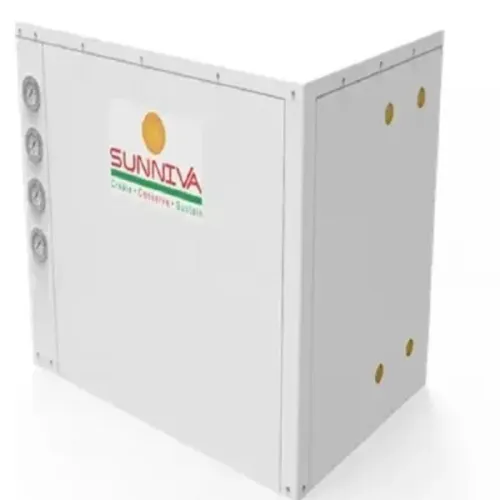
Ask about compressors, heat exchangers, controls, refrigerants, pumps, electrical protection, and structural construction.
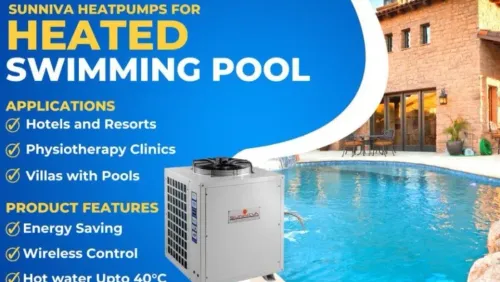
For swimming pools, confirm whether the heat exchanger material is compatible with treated pool water. For industrial applications, check material suitability for the relevant process.
4. Discuss Controls and Monitoring
Commercial equipment should provide practical operating controls.
Depending on project complexity, useful features can include temperature management, fault indication, safety protection, operating-hour tracking, and integration with building or process control systems.
5. Consider Maintenance Access
Equipment requiring difficult dismantling for routine maintenance can increase downtime.
Check whether compressors, filters, electrical panels, sensors, fans, and heat exchangers are accessible for inspection and servicing.
6. Compare Total Ownership Cost
The lowest initial quotation may not provide the lowest long-term cost.
Compare:
- Equipment price
- Installation requirements
- Expected energy consumption
- Maintenance needs
- Operating temperature range
- Serviceability
- Expected working life
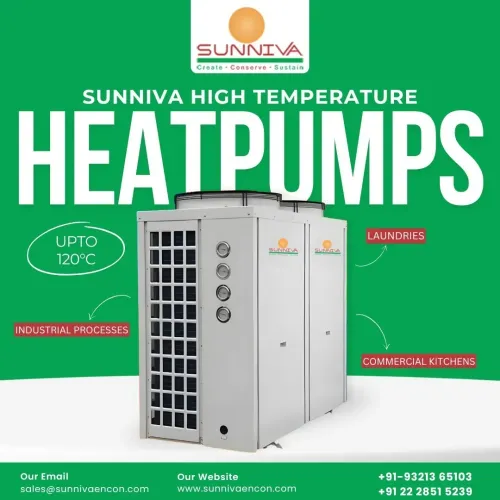
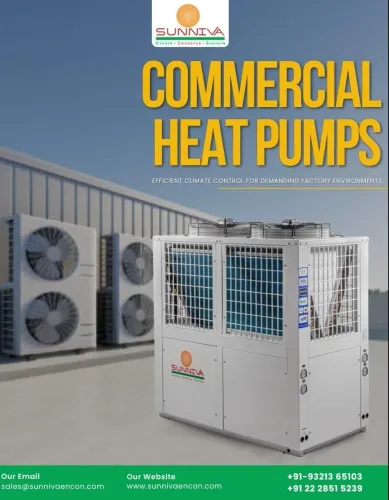
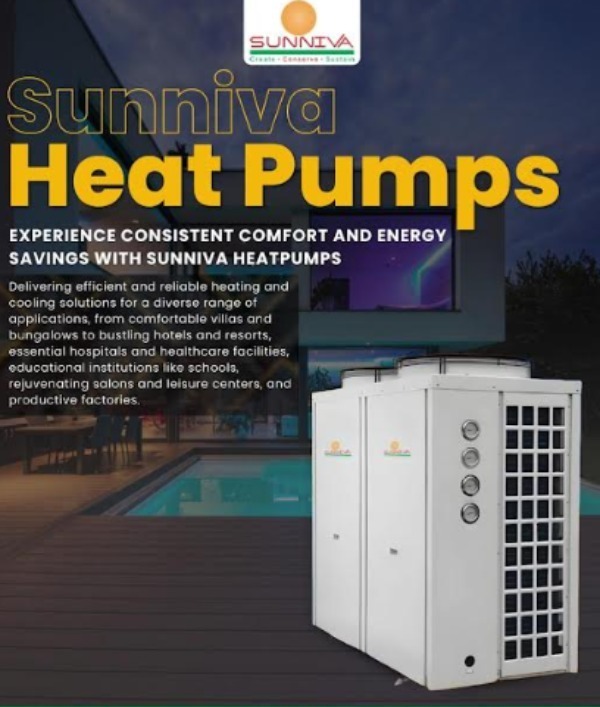
Sunniva Heatpumps manufactures commercial and industrial heat pump systems for applications including pools, hospitality, healthcare, food processing, dairy, and process heating. For projects in Mumbai and across Maharashtra, equipment selection can be based on the site's actual thermal requirements.
A dependable manufacturer should be able to explain not only what capacity is being proposed, but why that capacity suits the application. For serious commercial projects, engineering clarity is one of the most useful indicators of whether a heat pump supplier is the right fit.