The better heat source depends on more than a published COP: outdoor conditions, delivery temperature, annual operating hours, site access and electricity use can reverse the apparent advantage. By comparing performance, installation effort, lifecycle cost and site constraints, you can identify the option—or hybrid design—that fits your building or process.
Key takeaways
- Choose air source heat pumps where fast installation and limited site space matter.
- Choose geothermal heat pumps when land, drilling access and stable year-round performance justify the works.
- Compare electricity, maintenance, replacement and drilling costs across the system’s operating life.
- Match flow temperature, hot-water demand and operating hours to the heat pump design.
How Each Heat Pump Collects, Upgrades and Delivers Heat
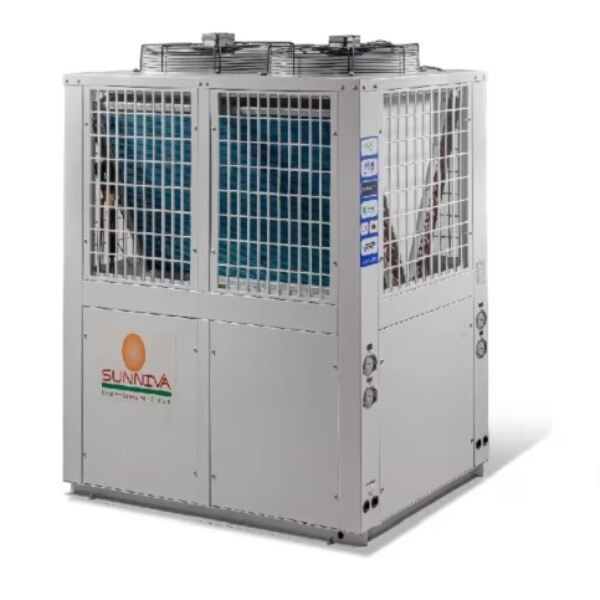
Air source heat pumps extract heat from outdoor air through a finned coil, even when the air feels cold. A refrigerant absorbs that heat, boils, and enters a compressor, which raises its pressure and temperature.
The hot refrigerant then releases heat through a condenser into water for radiators, fan coils, domestic hot water, or an industrial process.
Geothermal heat pumps collect heat through buried water-filled or antifreeze-filled loops in trenches or boreholes. Ground temperature changes less than outdoor air temperature, so the loop provides a steadier evaporator source and avoids air-side defrost. The same refrigerant-compressor-condenser sequence upgrades that low-grade heat before transferring it to the building or process circuit.
| Stage | Air source heat pumps | Geothermal heat pumps |
|---|---|---|
| Source collection | Outdoor coil absorbs ambient-air heat; humid conditions can trigger defrost | Ground loop absorbs heat from soil or rock; loop temperature is steadier |
| Heat upgrade | Compressor raises refrigerant pressure and temperature | Compressor performs the same pressure and temperature lift |
| Heat delivery | Condenser heats water or air inside the building or process | Condenser heats the same types of load circuits |
Trace any proposed system in this order:
- Identify the source-side temperature entering the evaporator: outdoor air for air source heat pumps, or loop fluid for geothermal heat pumps.
- Identify the required sink temperature, such as 45°C heating water or a higher process setpoint. A larger temperature lift increases compressor electricity.
- Add source-side electricity for fans or loop pumps, plus controls and defrost heaters where fitted. The compressor COP alone does not describe delivered heat.
- Size a geothermal loop for the building’s annual heating and cooling balance; an undersized loop loses temperature and performance.
Which System Performs Better in Indian Operating Conditions?
At design conditions, geothermal usually delivers steadier seasonal efficiency and useful heating capacity; air source heat pumps can win in warm regions with modest water temperatures and limited annual operating hours. Compare Indian hourly weather data, measured site loads and local electricity tariffs—not the label alone.
| Factor | Air source heat pumps | Geothermal heat pumps |
|---|---|---|
| Outdoor temperature | Capacity and COP fall as air gets colder; frost can trigger defrost and interrupt heating. | Ground temperature stays comparatively stable, preserving capacity and efficiency. |
| Humidity and monsoon | Wet coils, rain, salt-laden air and blocked airflow increase maintenance; cool humid periods can increase defrost energy. | Weather has little direct effect on the ground loop, but loop-pump electricity still matters. |
| High-temperature water | Efficiency drops sharply as the temperature lift increases, especially during cold weather. | Usually handles the same lift more consistently, but high sink temperatures still reduce COP. |
| Auxiliary electricity | Fans, defrost heaters, controls and compressor heaters add consumption. | Circulation pumps and controls add consumption; excessive flow can erase the loop advantage. |
For an energy efficient heat pump india project, request capacity and COP at the actual source and leaving-water temperatures. A 55°C or 70°C process-water requirement can make both options electricity-intensive; recover heat from wastewater, cooling water or exhaust air first where available.
For pools, air source equipment is often practical because the load is low-temperature, but cool, windy weather raises demand while reducing output. Test figures only compare when air temperature, humidity, pool-water temperatures and flow rate match. A pool cover can reduce required capacity more cheaply than a larger compressor.
What Installation Work, Space and Disruption Does Each System Require?
An air source heat pump needs a firm external base, service clearance and a route for electrical cables, refrigerant or water pipework, and condensate drainage. A delivery vehicle or crane must also reach the installation point; blocked access can turn a straightforward replacement into a lifting and civil-work problem.
| Option | Main site work | Access, permits and restoration |
|---|---|---|
| Air source | Plinth or roof supports, hydraulic headers, valves, insulation and condensate drains | Equipment access, electrical approval and any building or noise consent; restore only penetrations, paving or supports |
| Closed-loop geothermal | Horizontal trenches or drilled boreholes, buried pipe, manifolds, circulation pumps and ground reinstatement | Excavator or drilling-rig access, geological and utility checks, local excavation or drilling permissions; restore soil, paving and landscaping |
| Open-loop geothermal | Production and reinjection wells, pumps, filters, treatment equipment and discharge pipework | Drilling access plus groundwater abstraction, discharge or reinjection approvals; test yield and chemistry, then seal or restore work areas |
Use this installation checklist before comparing quotations:
- Measure the route from the plant room to the outdoor unit or manifold; long pipe runs add pressure drop, insulation work and pump electricity.
- Confirm whether a borehole rig can enter, turn and stabilise without removing gates, walls or overhead services.
- Reserve land for horizontal loops, keeping foundations, drainage lines and future construction clear.
- Obtain written confirmation of required municipal, groundwater, electrical, fire and building permissions; requirements depend on the site and system.
- Price reinstatement separately: asphalt, concrete, tiles, soil, planting and borehole sealing can outlast the equipment installation.
Geothermal heat pumps demand more disruption upfront, while air source systems concentrate work around the building and its hydraulic connections.
How Should You Compare Total Cost of Ownership?
Compare discounted lifetime cost, not the equipment quote alone. Build the model from Indian hourly weather data, measured site loads, local electricity tariffs and the required water temperature. A hotel pool, process line and 45°C hot-water loop will produce different results.
| Cost item | Air source heat pump | Geothermal heat pumps |
|---|---|---|
| Equipment and installation | Lower initial cost; outdoor unit, headers and hydraulic connections | Higher initial cost; boreholes or trenches, ground loop, headers and civil restoration |
| Pumps and electricity | Compressor, fans, controls, defrost and crankcase heaters consume power | Compressor, controls and loop pumps consume power; excessive flow can erase efficiency gains |
| Maintenance | Clean coils and filters; inspect fans, refrigerant circuit and corrosion protection | Maintain indoor equipment and loop pumps; inspect pressure, flow and water quality |
| Replacement and service life | Exposed fans, coils and controls face dust, humidity, salt and industrial contaminants | Indoor equipment is accessible; buried loop replacement is disruptive, so verify design, warranty and testing records |
Use capacity and COP at your design condition, not a headline rating. For a pool, match air temperature, humidity, entering and leaving water temperatures, and flow rate; a cover can reduce operating cost more cheaply than extra compressor capacity.
For an energy-efficient heat pump in India, include annual auxiliary electricity and part-load performance. Whether you obtain a proposal from SUNNIVA HEAT PUMPS or another supplier, require separate kWh estimates for compressors, fans, pumps and defrost, plus a replacement schedule and service response terms.
Geothermal earns its premium when stable source conditions, high annual hours or simultaneous heating and cooling offset loop capital.
Related products
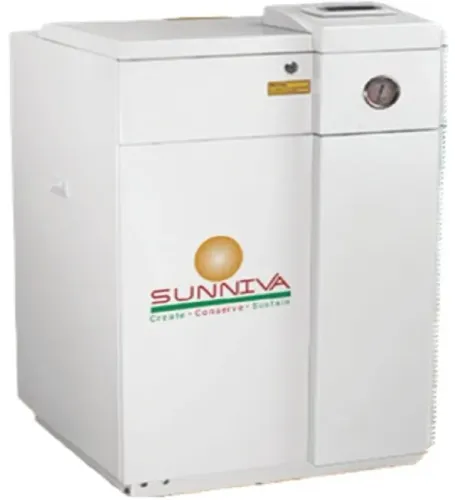
 | Geothermal Heat Pumps Geothermal Heat Pump ₹2500000 Geothermal Heat Pumps How it works Air temperature swings widely through the day and across seasons, but a few meters below the surface the ground... |
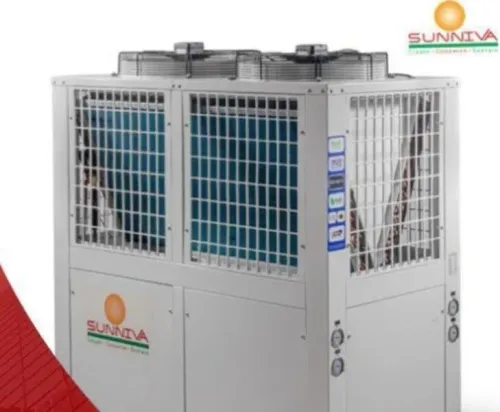
 | Monoblock Heatpump ₹125000 The Sunniva Monoblock Heatpump is a compact, all-in-one air-to-water heat pump that houses the compressor, refrigerant circuit, and heat exchanger... View product → |
Which Source Fits a Hotel, Factory, Pool or Constrained Site?
Choose air source heat pumps for hotels, pools and factories with limited land, moderate temperature lift and easy access for outdoor units. They become the wrong choice when dust, coastal salt, industrial contaminants, noise limits or high-temperature process loads drive frequent cleaning and poor seasonal performance.
| Site condition | Best fit | When it becomes the wrong choice |
|---|---|---|
| Constrained urban hotel or pool | Air source | Outdoor clearances, noise or fouled coils cannot be managed |
| Large site with high annual hours | Geothermal | Drilling access, geology, permits or restoration costs dominate |
| Factory with simultaneous heating and cooling | Geothermal or hybrid | Loads do not occur together, leaving the ground loop underused |
| Variable loads or difficult peak conditions | Hybrid | Backup fuel or electricity costs erase the operating benefit |
Choose geothermal when stable ground temperatures, long operating hours and valuable simultaneous heating and cooling justify boreholes or trenches. Reject it when drilling access is poor, groundwater protection is difficult, or loop-pump electricity and civil work outweigh the seasonal gain.
Choose a hybrid when an air source system can cover normal hours while a boiler or electric heater handles peaks, defrost interruptions or redundancy. Base the decision on hourly Indian weather data, measured loads, local tariffs and part-load auxiliary power—not catalog COP alone. That is the practical test for an energy-efficient heat pump in India.
Frequently asked questions
How do air source and geothermal heat pumps collect heat?
Air source heat pumps draw heat from outdoor air through a finned coil. Geothermal heat pumps exchange heat with the ground through buried horizontal loops or drilled boreholes.
Which heat pump performs better in Indian operating conditions?
Geothermal heat pumps provide a steadier heat source because ground temperature changes less than outdoor air. Air source heat pumps suit many sites when correctly sized for local temperatures, humidity and required water temperatures.
Which system requires more installation space and disruption?
Air source systems need outdoor equipment, pipework and electrical capacity. Geothermal systems also need excavation or drilling, ground loops and reinstatement, creating greater upfront disruption.
How should you compare the total cost of ownership?
Compare design, equipment, civil works, drilling, electricity, maintenance, controls, replacements and expected operating life rather than purchase price alone.
Which heat pump suits a hotel, factory, pool or constrained site?
Air source systems often fit constrained sites and phased projects. Geothermal systems suit properties with drilling or land access and steady year-round heating or hot-water demand.