The right choice depends on the process temperature, temperature lift, heat-load profile, available heat source, and required uptime—not on the EVI label or a maximum outlet-temperature claim. By the end, you will be able to compare boilers, electric systems, steam, thermal oil, heat recovery, solar thermal, and industrial heat pumps against the operating conditions of your facility.
Key takeaways
- Match the heat pump’s leaving-water temperature to the actual process requirement.
- Calculate continuous capacity from hourly load profiles, not nameplate heating demand.
- Compare heat recovery before replacing boilers, steam systems, or thermal-oil heaters.
- Demand flow rates, temperature lift, controls, efficiency data, and service terms in every proposal.
What counts as process heating, and where do EVI heat pumps fit?
A heat pump serving a building is not automatically a process-heating system. Comfort heating warms occupied rooms through air handlers, radiators, or underfloor circuits; domestic hot-water production heats water for showers, kitchens, and hygiene outlets. Industrial process heating supplies energy directly to production, cleaning, or treatment steps.
- Comfort heating: maintain indoor temperature and ventilation conditions.
- Domestic hot water: heat stored or flowing water for people and sanitation.
- Process heating: change a product, ingredient, surface, or production condition through heat.
Process loads include hot-water circulation, tank heating, washing, pasteurisation, blanching, drying-air heating, laundry, chemical baths, and preheating before a boiler, oven, or steam generator. The required temperature, flow, operating hours, and continuity matter more than the building’s floor area.
EVI heat pumps fit most directly where the process needs low- or medium-temperature heat and a stable heat source is available. That source could be outdoor air, groundwater, cooling water, refrigeration condensers, wastewater, or exhaust air.
The heat pump transfers that energy into a hot-water loop or process heat exchanger; it does not automatically suit direct steam generation, high-temperature ovens, or thermal-oil duties.
For industrial process heating solutions, test the load and source together. A dirty or corrosive waste stream, freezing risk, or fluctuating source temperature can rule out a technically attractive EVI heat pump before its nominal capacity becomes relevant.
Can the required temperature and capacity be delivered continuously?
Yes—but only if the heat pump can sustain the required temperature lift and output at the process design point. Temperature lift is the difference between the heat-source temperature and the delivered supply temperature; a larger lift raises compressor work, reduces COP, and usually reduces available capacity.
Use supply and return temperatures, not the maximum outlet temperature, to test suitability. A system supplying 80°C water may have lower output at 80°C than at 50°C, while a 95°C system faces higher discharge pressure, declining COP, and stricter operating limits. Pool-heating performance proves little about this duty.
- State the minimum source temperature, required supply and return temperatures, design flow, temperature-control tolerance, and hours of continuous operation.
- Request capacity and COP tables at those exact conditions, including minimum and maximum source temperatures, compressor speed, auxiliary power, and turndown. The label EVI heat pumps does not guarantee a temperature or capacity.
- Confirm that the stated output is continuous rather than a short-duration peak. A unit’s maximum water temperature is not usable process capacity if it reaches that temperature only at reduced flow or partial load.
- Treat operation above 95°C separately. Water heating from 95°C to 100°C and steam-territory operation require pressure-rated equipment, appropriate controls, and evidence of continuous full-load performance; they are not established by a high outlet-temperature statement alone.
Industrial heat pumps suit low- and medium-temperature loads most directly. Claims of 150°C, or 180–200°C, require exact operating data, since specialized refrigerants, compressors, or cascade systems may be involved.
How do heat pumps compare with boilers, steam, thermal oil, and heat recovery?
Compare delivered heat cost, uptime, control, and temperature fit—not COP alone. Screen an industrial heat pump with electricity price divided by COP, then add demand charges, pumping, fans, maintenance, backup heat, and the value of recovered heat.
| Option | Delivered heat cost and availability | Control and temperature fit |
|---|---|---|
| EVI heat pumps | Competitive at high runtime and moderate electricity prices; source stability determines uptime. | Precise hot-water control; strongest below 80°C, with super-high-temperature designs around 95°C. Claims above that require continuous full-load data. |
| Gas or diesel boilers | Fuel price, seasonal efficiency, and maintenance set cost; fuel storage or supply interruptions affect availability. | Fast response and broad capacity; suitable for hot water, steam generation, and high-temperature peaks. |
| Electric resistance or electrode boilers | Near 100% point-of-use conversion, but electricity demand charges can make heat expensive. | Rapid, highly controllable output; electrode systems suit large hot-water loads, while resistance units suit smaller or backup duties. |
| Steam systems | Efficient at established scale, but boiler, treatment, distribution, and condensate losses add cost. | Excellent heat transfer and process control; appropriate where equipment already requires steam. |
| Thermal-oil heaters | Fuel or electricity cost plus pump and fluid maintenance; continuous operation is practical. | Stable high-temperature heat for dryers and reactors, but unsuitable for ordinary hot-water loads without heat exchange. |
| Waste-heat recovery | Lowest-cost heat when a steady source exists; fouling, corrosion, contamination, or variation can remove the benefit. | Limited by source temperature and schedule; pair with industrial heat pumps to raise useful temperature. |
| Solar thermal | Low operating cost but intermittent availability demands storage or backup. | Useful for daytime preheating, not sole supply for continuous or high-temperature production. |
Industrial process heating solutions often work best as hybrids: the heat pump covers base load, while a boiler or electric heater handles startup, peaks, and temperatures outside its economic envelope.
What information must you collect before sizing the system?
Size the system from measured operating data, not the largest nameplate load. A facility survey should produce a heat balance showing what the process needs each hour and what the heat source can reliably provide.
1. Collect at least 12 months of hourly or representative interval data. Record heat demand, operating hours, startup periods, peak demand, seasonal conditions, shutdowns, and required uptime; a maximum-load figure alone can oversize industrial heat pumps.
2. Measure the process water or fluid flow and its inlet and outlet temperatures during normal, startup, cleaning, and peak operation. Note the required supply temperature, return temperature, temperature lift, and any batch cycle that changes the load.
3. Identify and log the heat source: refrigeration condensers, cooling water, wastewater, exhaust air, or another stream. Record source temperature by season, availability, pressure, contamination, freezing exposure, corrosion, and fouling risk; unstable or dirty sources can defeat otherwise suitable industrial process heating solutions.
4. Check the site before selecting equipment. Document available electrical capacity, transformer and demand limits, plant-room area, ventilation, service access, noise constraints, pipework sizes, insulation, pumps, valves, and connection points.
5. Decide whether storage or hybrid backup is needed. Define tank volume, charging and discharging temperatures, control signals, and the roles of a boiler or electric heater during startup, peak demand, defrost recovery, outages, and temperatures outside the economical operating range. Include backup capacity and required changeover time in the design brief.
How should you evaluate an industrial heat-pump proposal?
Evaluate the proposal at your operating points, not from a nameplate COP. Require EN 14511 test conditions where applicable, then compare delivered capacity and COP at several source and leaving-water temperatures, including the design peak and minimum expected load.
- Request a capacity-and-COP table showing electrical input with pumps, fans, controls, crankcase heaters, and other auxiliaries included.
- Ask for minimum stable output, turndown ratio, cycling limits, start-up time, and part-load data; maximum capacity alone can hide poor control at low demand.
- Record defrost trigger, duration, heat penalty, recovery time, and whether the stated output remains available during defrost.
- Specify sound-pressure or sound-power levels, measurement distance, refrigerant and charge, compressor arrangement, source type, heat-exchanger approach temperatures, and freeze or fouling protections.
- Identify reliability risks, maintenance intervals, critical spare parts, service response, warranty duration and exclusions, and performance remedies if measured output misses the schedule.
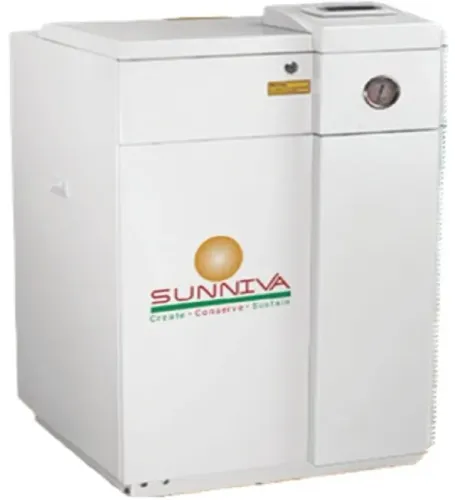
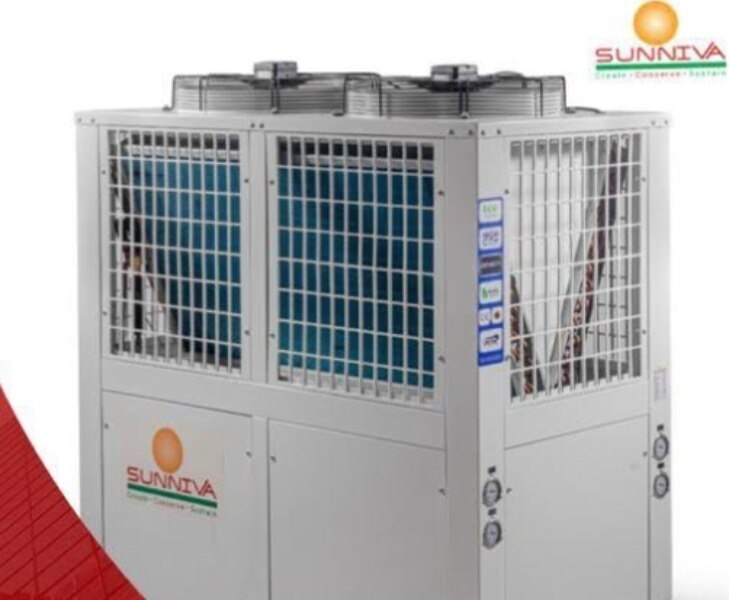
- Tie a sunniva heat pump to its exact model number, revision, refrigerant, rated capacity, supply-temperature range, compressor configuration, test standard, and warranty before comparing it with EVI heat pumps or other industrial heat pumps.
Base the decision on measured hourly load duration, not only peak load. Price a hybrid design if a boiler or resistance heater must cover startup, extreme peaks, defrost recovery, or uneconomic operating points; check electrical demand, storage, and backup hours explicitly.
Related products
 | EVI Heat Pumps ₹500000 EVI Heat Pumps How it works Enhanced Vapour Injection introduces a second, intermediate-pressure injection of refrigerant vapour into the scroll... View product → |
 | Commercial Heat Pumps ₹500000 Commercial Heatpumps How it works This series serves centralised hot water systems where a large storage tank feeds multiple outlets. View product → |
Frequently asked questions
What counts as industrial process heating?
Process heating supplies energy directly to production, cleaning, drying, pasteurisation, washing, treatment, or other industrial steps. It differs from space heating and domestic hot-water production.
Can EVI heat pumps deliver process heat continuously?
They can when the selected unit covers the required leaving-water temperature, flow rate, temperature lift, and continuous duty cycle. Check capacity at the design source and sink temperatures rather than relying on nominal ratings.
How do EVI heat pumps compare with boilers, steam, and thermal-oil systems?
Compare delivered temperature, response time, efficiency, emissions, fuel or electricity availability, maintenance, controls, and the cost of modifying existing distribution equipment. Heat recovery can be the better first option when a reliable waste-heat source exists.
What information is needed to size an industrial heat pump?
Collect the process temperature setpoints, supply and return temperatures, flow rates, operating hours, hourly and seasonal loads, source temperature, peak demand, water quality, space constraints, electrical supply, and required redundancy.
What should an industrial heat-pump proposal include?
Request performance tables at your design conditions, compressor and refrigerant details, control logic, electrical demand, noise data, installation boundaries, commissioning tests, warranty terms, maintenance requirements, and guaranteed operating limits.
Related products
 | Super High Temperature Heat Pumps Super High Temperature Heat Pump ₹1250000 Super high temperature heat pumps are designed for demanding applications where standard heat pumps can’t deliver. View product → |
 | High Temperature Heat Pumps ₹750000 High Temperature Heatpumps How it works Using R134a refrigerant and a higher condensing temperature than standard commercial units, this series lifts... View product → |
 | Ultra High Temperature Heat Pumps Ultra High Temperature Heat Pump ₹1200000 Ultra High Temperature Heat Pumps How it works This series pushes heat pump output into genuine steam territory. View product → |