A hotel monoblock system is worth considering only when its output matches the property’s actual hot-water peaks, electrical capacity, plant-room layout and backup strategy. By the end, you can estimate the required storage and heating capacity, compare delivered heat with boilers and resistance heating, and identify the installation and tender conditions that determine whether the investment is sound.
Key takeaways
- Size from measured peak hot-water demand, not room count.
- Separate domestic hot water from pools, heating and process loads.
- Compare delivered heat with electricity, peak demand and backup costs.
- Require load data, recovery calculations and commissioning terms in the tender.
Start with the hotel’s demand profile, not its room count
A hotel is a strong monoblock candidate when hot-water demand is concentrated but predictable, with clear morning and evening peaks, steady occupancy, and enough time for overnight recovery. Room count alone is a poor sizing proxy. Measure guest showers, kitchen and laundry use, recirculation losses, incoming-water temperature, storage temperature and required recovery time.
Look for these site conditions:
- Outdoor space with adequate airflow, service access and noise separation from guest rooms.
- Plant-room space for storage tanks, pumps, controls and a staged backup heater.
- Electrical capacity for the unit’s maximum running current, phase requirements and starting or inverter behaviour.
- A demand profile that allows the heat pump to run outside the sharpest draw periods.
- A low-temperature heat source for most operating hours, rather than constant production at 60°C.
Treat the monoblock as part of a hybrid plant, not the sole source of hotel hot water. A backup boiler or electric heater covers disinfection cycles, compressor lockout, maintenance, low ambient conditions and sudden occupancy peaks.
High leaving-water temperatures reduce capacity and efficiency, so a system designed for 55–60°C storage needs different economics from one serving space heating.
For a commercial heat pump India project, require measured water flow, entering and leaving temperatures, electrical input, delivered capacity and control operation at representative load. Confirm that the transformer and generator support the unit before comparing its advertised COP with fuel or resistance heating.
Size the tank and heat pump from peak hot-water use
An energy efficient heat pump india search is not a design calculation. Start with the hotel’s peak draw: guest showers, breakfast demand, kitchen use, laundry, recirculation losses and the incoming-water temperature. Size storage for the morning and evening peaks, not average litres per guest per day.
- Measure peak hot-water demand in litres during the busiest hour. Subtract the litres the heat pump can produce during that hour; divide the remaining volume by the tank’s usable-storage fraction, then round up for stratification and storage losses.
- Calculate heating energy with: litres × 4.186 × (target storage temperature − incoming-water temperature) ÷ 3,600. The result is kilowatt-hours.
- Divide that energy by the required recovery time in hours. Add recirculation, pipe and tank losses, then select capacity using the manufacturer’s output at the actual outdoor-air temperature, entering-water temperature and leaving-water temperature.
- Check the result against the hotel’s electrical limit and retain staged backup for disinfection, compressor lockout and exceptional peaks.
| Example | Calculation | Result |
|---|---|---|
| Peak draw | 900 litres; 20°C incoming water; 60°C storage | 41.9 kWh |
| Three-hour recovery | 41.9 ÷ 3 | 14.0 kW |
| Design output | 14.0 kW plus 20% distribution and storage losses | 16.8 kW |
| Tank volume | 900 ÷ 0.70 usable fraction | 1,286 litres; select the next available size |
A 55–60°C domestic-hot-water specification will deliver less capacity and a poorer COP than low-temperature heating. Price the heat pump from its domestic-hot-water data, not its headline space-heating COP.
Separate domestic hot water from heating, pools and process loads
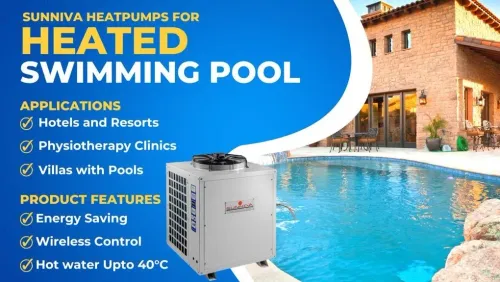
One monoblock can support several hotel loads, but it should not feed every circuit as though they were interchangeable. Domestic hot water needs high storage temperatures, recirculation and hygiene control; space heating and pool heating usually operate at lower temperatures with steadier demand. A pool-rated unit is not automatically suitable for sanitary hot water.
1. Put domestic hot water behind its own storage tank, circulation loop and temperature sensors. Keep pool and space-heating circuits hydraulically separated with appropriate pumps, buffer volume and minimum flow.
2. Specify the sunniva heat pump at the required hot-water leaving temperature, not its low-temperature heating rating. Higher temperatures reduce COP and available capacity, so calculate domestic-hot-water COP separately from space-heating COP.
3. Define the hygiene cycle: storage temperature, periodic high-temperature disinfection, recirculation-temperature monitoring and the auxiliary heater used during the cycle. Confirm the procedure against local public-health requirements.
4. Retain staged backup for breakfast peaks, compressor lockout, low outdoor temperatures, maintenance and electrical-load limits. Control modules by tank or leaving-water temperature, and verify defrost condensate drainage.
During commissioning, record flow rate, entering and leaving water temperatures, electrical input, delivered capacity and control response at representative loads. If one monoblock cannot meet these tests without unstable flow or excessive backup operation, use separate modules or keep a hybrid plant.
Compare delivered heat, electrical demand and backup costs
A monoblock costs less to operate when its electricity cost per delivered kWh of heat, plus demand charges and backup energy, stays below the useful-heat cost of LPG, diesel or resistance heating.
Calculate useful heat, not nameplate COP: electricity tariff divided by measured COP for the heat pump, and fuel energy price divided by boiler efficiency for LPG or diesel.
| Option | Delivered-heat calculation | Costs that can change the result |
|---|---|---|
| Monoblock | Electricity tariff ÷ actual COP | Demand charges, electrical upgrades, storage losses, pump and control replacement, backup heater energy |
| LPG boiler | LPG energy price ÷ boiler efficiency | Fuel delivery, burner maintenance, standing losses and tank costs |
| Diesel boiler | Diesel energy price ÷ boiler efficiency | Fuel storage, servicing, emissions equipment and generator dependence |
| Electric resistance | Electricity tariff ÷ 1 | High consumption during peak tariff periods and large connected load |
Separate the domestic-hot-water calculation from space heating. Producing 55–60 °C storage water reduces COP and available capacity, so a low-temperature heating COP cannot justify a high-temperature hot-water project.
For a commercial heat pump India installation, request maximum running current, phase requirements, starting or inverter behaviour, and confirmation that the transformer and generator can carry the load. An energy efficient heat pump India project should also include staged backup for disinfection, compressor lockout, low outdoor temperatures and maintenance.
Accept the savings only after measuring water flow, entering and leaving temperatures, electrical input, delivered capacity and controls at representative load. That record establishes the site’s actual COP.
Make the installation and tender prove the business case
Require the tender to prove delivered performance, not repeat a catalogue COP. For a Sunniva heat pump, ask for the model-specific performance table at your incoming-water temperature, leaving-water temperature, ambient range and design flow rate.
SUNNIVA HEAT PUMPS should also state refrigerant identity and charge, sound power, operating envelope, warranty exclusions, spare-parts lead times and service response times.
- Specify maximum running current, phase, starting or inverter behaviour, protection devices, power-factor assumptions and harmonic limits.
- Confirm that the hotel transformer, generator and distribution board can support the unit without displacing essential loads.
- Show the outdoor hydronic arrangement: insulated and freeze-protected pipework, isolation valves, strainers, drain points and the response to a power failure.
- If the refrigerant is R290 or R32, require the charge, location, ventilation, electrical and service compliance documents.
- Name comparable hotel references and define liquidated remedies for missed capacity, noise or commissioning dates.
A commercial heat pump in India needs a witnessed acceptance test at representative load. Record water-flow rate, entering and leaving water temperatures, electrical input, delivered heating capacity, control operation and calculated site COP; separate domestic-hot-water results at 55–60°C from lower-temperature heating results.
| Evidence | What it proves | Reject the offer if |
|---|---|---|
| Performance table | Capacity and input at your design points | Only a nominal COP is supplied |
| Electrical schedule | Infrastructure and generator compatibility | Current or phase data is absent |
| Commissioning record | Actual delivered heat and site COP | Testing is limited to controls |
| Service schedule | Operational risk after handover | Lead times and response times are undefined |
Related products
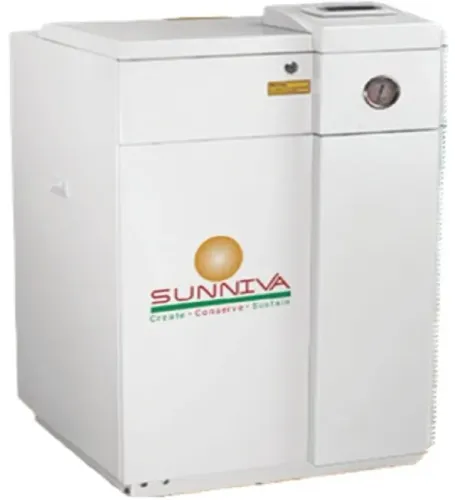
 | Monoblock Heatpump ₹125000 The Sunniva Monoblock Heatpump is a compact, all-in-one air-to-water heat pump that houses the compressor, refrigerant circuit, and heat exchanger... View product → |
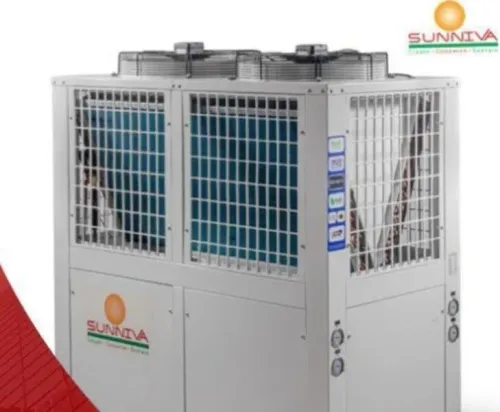
 | Commercial Heat Pumps ₹500000 Commercial Heatpumps How it works This series serves centralised hot water systems where a large storage tank feeds multiple outlets. View product → |
Frequently asked questions
Is a monoblock heat pump suitable for a hotel?
It suits hotels with concentrated, predictable hot-water peaks, steady occupancy and enough time for overnight tank recovery.
How should you size a hotel monoblock heat-pump system?
Measure guest showers, kitchen and laundry use, recirculation losses, incoming-water temperature, storage temperature and required recovery time.
Should hotel domestic hot water, pool heating and process loads share one heat pump?
Treat them as separate loads because their temperatures, schedules and peak demands differ; combine them only after checking the full operating profile.
What costs should you compare before approving a commercial heat pump in India?
Compare delivered heat, electrical demand, backup capacity, storage, installation, maintenance and commissioning costs against the existing heating system.