Choosing a geothermal system in India requires more than matching a heat-pump capacity to a building’s floor area. By the end, you will be able to compare loop configurations, assess a site, calculate the real operating load, and specify performance data that supports a sound investment decision.
Key takeaways
- Use separate ground, refrigerant, and building-water circuits in the plant design.
- Choose horizontal, vertical, or open-loop systems according to land, geology, and water conditions.
- Size the heat pump from simultaneous heating, cooling, and hot-water loads.
- Require performance data, loop design documents, controls, and service commitments from suppliers.
What equipment makes a geothermal system work as a complete plant?
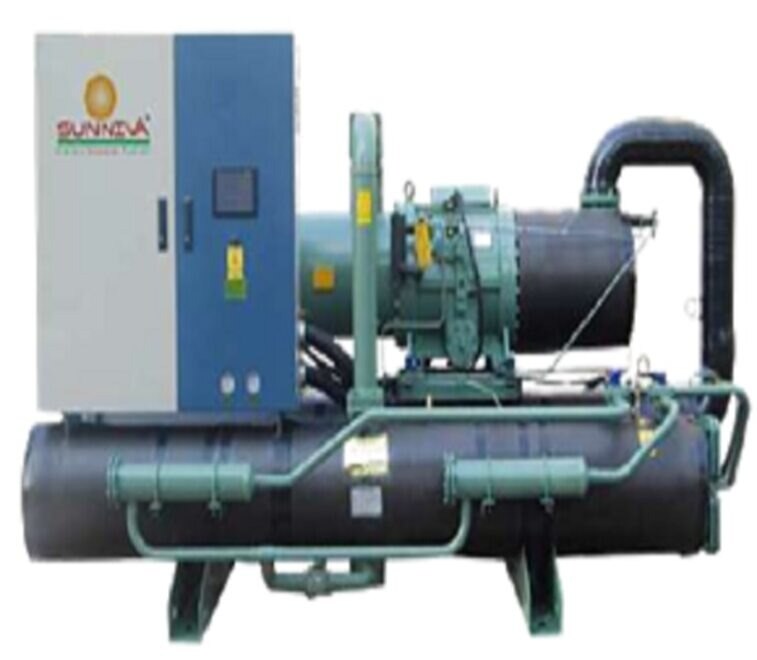
A complete geothermal plant moves heat through two separate fluid circuits and a refrigerant circuit. A water or antifreeze solution circulates through the ground heat exchanger, then passes through the source-side heat exchanger and transfers energy to the refrigerant. The compressor raises refrigerant pressure and temperature; the condenser delivers that heat to building-side water.
An expansion device lowers refrigerant pressure, and evaporation returns it to the source side.
The plant also needs equipment and controls that keep those transfers safe and measurable:
- Ground-loop headers, source pump, strainers, isolation valves, and flow meter
- Compressor, source-side heat exchanger, condenser, expansion valve, and refrigerant sensors
- Load pump, distribution piping, terminal units, and domestic hot-water storage
- Flow proving, temperature sensors, pressure switches, and freeze protection
- Compressor staging, valve control, backup heat, and hot-water recovery control
- Alarms and data logging for entering and leaving temperatures, flow, and power
A COP without operating conditions is incomplete. Require entering source temperature, leaving load temperature, source and load flow rates, compressor power, pump and control power, delivered capacity, and control setpoints; otherwise a favourable nameplate figure cannot be reconciled with field performance.
ISO 13256-1 covers water-to-air and water-brine-to-air units, while ISO 13256-2 covers water-to-water and brine-to-water units. Check space-heating COP separately from hot-water COP, especially where storage temperature, pasteurisation, recovery time, or an electric booster raises the temperature lift.
Which ground-loop configuration fits an Indian site?
Choose the loop by testing what the site can reliably provide, not by assuming “geothermal” means a hot underground resource. A geothermal heat pump in mumbai usually faces dense plots, cooling-dominated loads, specialist drilling and monsoon disruption, so compare vertical closed loops with horizontal and open-loop options.
| Option | Land, drilling and water | Main project risk |
|---|---|---|
| Horizontal collector | Large unbuilt area; shallow excavation; no groundwater required | Soil temperature, rock, drainage and seasonal conditions can reduce performance |
| Vertical closed-loop boreholes | Small plot; specialist drilling, grouting, headers and circulating fluid; no ongoing water withdrawal | Borehole spacing, thermal interference, rig access, nearby structures and approvals |
| Open-loop groundwater | Small plant footprint; abstraction and discharge or reinjection infrastructure | Yield, chemistry, filtration, scaling, corrosion, fouling and suspended solids |
Horizontal loops suit campuses or undeveloped land where excavators can work without disturbing foundations. Vertical borefields suit constrained urban plots, but they move risk into drilling quality, grout placement, header routing, spacing and permits.
Open-loop water is not automatically more efficient. Proceed only with dependable groundwater records and testing, a lawful discharge or reinjection route, filtration, and controls for scale, corrosion, fouling and solids.
Check these items before choosing:
- Plot dimensions and available unbuilt area
- Soil and rock layers, including groundwater records
- Drilling-rig access, turning space and working clearance
- Monsoon drainage, flood risk and construction timing
- Nearby foundations, basements, utilities and buried services
- Annual cooling heat rejection, because an undersized borefield raises loop temperatures and electricity use over time
How should you size geothermal equipment for heating, cooling and hot water?
Floor area alone cannot size geothermal equipment. A correct design starts with hourly heat loss, peak and seasonal cooling load, domestic hot-water demand, occupancy, ventilation, entering-water temperature, required leaving-water temperature, flow rate, and existing emitter temperatures.
1. Model the building hour by hour. Include hotels, hospitals, offices, resorts, pools, process heating and district systems as distinct load profiles; a cooling-dominated Mumbai office has a different design from a winter-heated hospital. Include latent cooling load, dedicated outdoor-air treatment, airflow control, condensate drainage and coil dew-point performance.
Stable ground temperature does not control indoor humidity.
2. Size the ground heat exchanger for peak heating and cooling duty, then check the annual balance between heat extracted in heating mode and heat rejected in cooling mode. A cooling-dominated borefield that rejects more heat than it extracts will warm over successive years, reducing cooling capacity and increasing electricity use.
3. Check the distribution temperature before selecting the compressor. Supplying retrofit water at 65–80°C increases compressor lift and reduces efficiency. Larger radiators, fan coils, radiant systems, envelope improvements, electric boosters or a separate high-temperature stage can lower that penalty.
4. Design hot water separately from space heating. State storage temperature, recovery time, pasteurisation or Legionella-control strategy, and maximum compressor conditions; distinguish hot-water COP from space-heating COP. Use a separate heat exchanger for chlorinated or salt pool water, and verify flow and water chemistry.
For an energy-efficient geothermal heat pump in India, require measured entering and leaving temperatures, flow rates, compressor and pump power, delivered capacity and control setpoints during commissioning.
When is geothermal the better energy-efficient heat-pump choice?
A geothermal system is the better energy efficient heat pump for india when stable seasonal performance, quiet operation, and lower site emissions justify greater construction effort. It avoids direct exposure to outdoor-air swings, but excavation or drilling, grouting, headers, pumps, controls, and specialist commissioning raise upfront cost.
| Option | Efficiency and weather performance | Noise, emissions, maintenance, and installation |
|---|---|---|
| Geothermal closed-loop | Stable source temperature avoids defrost and severe outdoor-air penalties | Quiet and low operating emissions; buried loops reduce exposure, but drilling, grouting, headers, pumps, and commissioning add work and lifecycle cost |
| Air-source | Simpler installation, but outdoor temperature, defrost, fan power, and backup heat affect seasonal results | Exposed equipment creates fan noise and weather-related maintenance; lower initial construction effort |
| Open-loop water-source | Low source-side resistance can improve efficiency | Requires groundwater yield, filtration, chemistry control, lawful discharge or reinjection, and protection against fouling, scaling, and corrosion |
| Conventional boiler | Familiar high-temperature distribution, but combustion continues and low-temperature emitters lose their efficiency advantage | Established maintenance route, but fuel use and combustion emissions remain |
Compare systems using seasonal delivered heating or cooling divided by total electricity: compressors, loop pumps, distribution pumps, fans, controls, standby loads, defrost, and backup heat. Do not quote payback or capital savings without site-specific drilling, tariff, load, and operating data. In Mumbai, include humidity-control energy and condensate management in the comparison.
What should an Indian buyer require from a geothermal heat-pump supplier?
Do not accept a geothermal heat-pump quote until the supplier shows how the design will perform on your site, not only its nameplate COP. Make these documents contractual deliverables:
1. A site report identifying soil and rock conditions, drilling access, groundwater constraints, nearby foundations and utilities, and construction risks during Mumbai’s monsoon.
2. An hourly heating, cooling and hot-water load model, plus an annual ground-load balance showing whether cooling rejects more heat than heating extracts. Include delivered capacity, entering and leaving temperatures, occupancy and process loads.
3. For a large vertical borefield, a thermal response test, borehole layout, spacing, depths, header arrangement and hydraulic calculations. State design flow rates, antifreeze concentration, allowable water chemistry, pressure losses and pump power.
4. A maintenance plan covering filters, strainers, pumps, valves, antifreeze testing, water-quality checks, alarms, sensor calibration and borefield performance.
5. Commissioning records for entering and leaving source-fluid temperatures; entering and leaving load-water temperatures; source and load flow rates; compressor and pump electricity; delivered capacity; and control setpoints. These measurements let you reconcile capacity and COP with actual operating conditions.
Specify separate space-heating COP and hot-water COP. Require the design to state storage temperature, recovery time, high-temperature or electric backup, legionella management, pool heat-exchanger materials and chemistry limits, pool bypass and flow proving, and humidity-control arrangements.
A buyer comparing a geothermal heat pump supplier in India can use this evidence to test accountability rather than marketing claims. SUNNIVA HEAT PUMPS belongs in that comparison only when it supplies these records for a Mumbai commercial, industrial, hotel, hospital, pool or process-heating project.
Related product
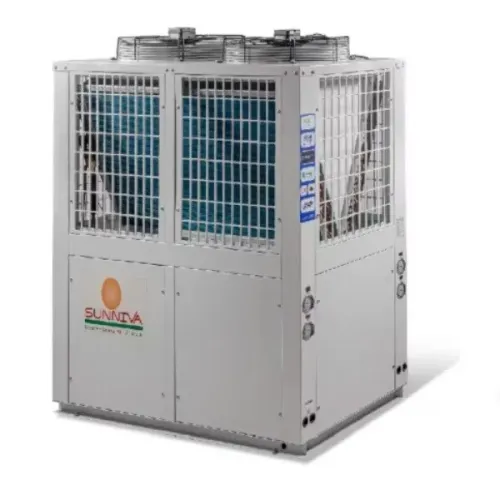
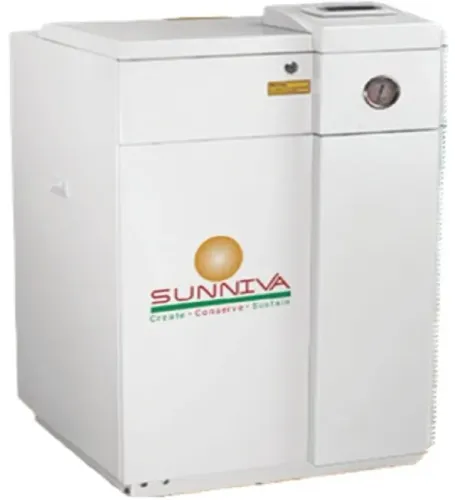
 | Geothermal Heat Pumps Geothermal Heat Pump ₹2500000 Geothermal Heat Pumps How it works Air temperature swings widely through the day and across seasons, but a few meters below the surface the ground... |
Frequently asked questions
What equipment makes a geothermal system work as a complete plant?
A complete plant uses a ground heat exchanger, source-side heat exchanger, refrigerant circuit, compressor, condenser, circulation pumps, controls, and building-side distribution equipment.
Which ground-loop configuration fits an Indian site?
Choose horizontal loops where land is available, vertical boreholes where space is limited, and open-loop systems only where groundwater quality, yield, discharge, and approvals support them.
How should you size geothermal equipment for heating, cooling and hot water?
Calculate the building’s peak heating and cooling loads, hot-water demand, required temperatures, ground-loop capacity, and simultaneous operating conditions before selecting the heat pump.
What should an Indian buyer require from a geothermal heat-pump supplier?
Request equipment performance data, ground-loop calculations, temperature and flow limits, controls documentation, installation scope, commissioning tests, warranty terms, and local service support.