Cold outlets do not automatically mean the heat pump is undersized. Trace the temperature and flow from the machine to the tank, circulation loop, branches, and outlets, then compare the measured demand with the system’s design capacity.
Key takeaways
- Trace the fault from the coldest outlet toward the tank and heat pump.
- Check circulation flow before changing controller settings or replacing the heat pump.
- Compare actual demand with delivered capacity during the coldest operating period.
- Request like-for-like quotes that separate equipment, pipework, electrical work, and commissioning.
Start at the cold outlet and trace the fault upstream
Start at the coldest outlet and trace the fault upstream before changing controller settings. Decide whether the failure sits at the heat pump, storage tank, circulation loop, or one branch. A normal leaving-water temperature proves only that the machine is producing hot water; it does not prove that a remote branch receives design flow.
During simultaneous demand, record:
- Each outlet temperature
- Heat-pump leaving-water temperature
- Tank-top and tank-bottom temperatures
- Return-water temperature
- Flow rate or differential pressure
- Compressor run status and defrost status
- Outdoor temperature
- Every zone-valve position
For a commercial heat pump for India and a commercial heat pump water heater, test the distribution system alongside the heat pump.
| Pattern | Likely fault area | Next check |
|---|---|---|
| One cold outlet; nearby outlets normal | Individual branch, mixing valve, isolation valve, or air | Check branch flow, valve position, insulation, trapped air, and the outlet mixing valve |
| Several remote outlets cold | Hydraulic imbalance, undersized return piping, air, or pump performance | Measure differential pressure and circuit flow; inspect strainers, balancing valves, pump rotation, and non-return valves |
| All outlets cool together | Tank recovery, compressor staging, demand, or plant controls | Compare tank temperatures, recovery rate, compressor status, leaving-water limit, and demand |
A hot tank top with a cold bottom can indicate stratification during recovery. A hot upper tank with a cold return and distant outlets points instead to inadequate circulation. Do not raise the setpoint until these measurements identify the fault.
Separate tank stratification from circulation failure
A hot tank top with a cold bottom during recovery can indicate normal stratification. A hot upper tank combined with a cold return and cold distant outlets indicates circulation failure, not inadequate heat production.
| Observation | Likely condition | Confirm with |
|---|---|---|
| Hot top, cold bottom during recovery | Normal stratification | Compare tank temperatures as recovery continues |
| Hot upper tank, cold return, cold remote outlets | Poor circulation | Measure loop flow or differential pressure |
| Hot supply pipes, cold outlet | Failed mixing valve or branch fault | Test valve position and outlet temperature |
- Confirm that the circulation pump runs in the correct direction, then measure its flow or differential pressure. Clean strainers and filters, open balancing valves, and inspect non-return valves for reversed installation or leakage.
- Bleed air from high points. Check that the return pipe is sized for the required loop flow; an undersized return starves distant outlets even when the commercial heat pump water heater reaches its setpoint.
- Compare the controller setpoint with measured temperatures. Ensure each sensor touches the pipe or sits in the correct tank pocket, rather than sensing ambient air.
- Inspect dead legs, long uninsulated branches, closed isolation valves, and outlet mixing valves. A mixing valve stuck open can deliver cold water while both supply pipes remain hot.
Balance each circuit using measured flow, not simply higher pump speed. Excess speed can create noise, high return temperatures, and wasted pumping power.
Decide whether demand exceeds capacity or the controls are limiting it
A capacity problem persists when delivered heat falls short of the measured demand profile; a control problem appears when the equipment has available capacity but the controller withholds it. Compare both against actual site conditions, not a nominal rating.
1. Record peak simultaneous use, draw-off volume, storage volume, recovery time, and demand during morning, shift-change, and bathing peaks. Log the heat pump’s entering-water temperature, leaving-water temperature, outdoor temperature, part-load condition, and delivered heat. Compare those figures with the manufacturer’s performance table.
2. Check whether the controller imposes a maximum leaving-water temperature, anti-short-cycle timer, compressor staging rule, demand-response setting, or domestic-hot-water priority. A hot-water recovery command can temporarily deprive space-heating circuits even while the compressor operates normally.
3. Do not treat a higher setpoint as a capacity upgrade. It cannot correct inadequate flow, poor pipe insulation, insufficient storage, or a unit that cannot recover between peaks.
High leaving-water temperatures increase compressor lift, lower COP, and reduce available capacity; a system designed for 60–70°C water can produce less output than a low-temperature air-source unit’s nominal rating.
4. For a commercial heat pump for India, compare retrofit remedies before choosing a larger machine. Increasing emitter area, removing restrictions, improving the building envelope, adding storage, or using a cascade or high-temperature design may solve the shortfall more effectively.
Use a documented scalding and Legionella-control strategy before changing storage or outlet temperatures. If the required high-temperature cycle exceeds the heat pump’s reliable capability, specify a properly controlled electric or other booster stage.
Check air-source, water-side, electrical, and refrigerant conditions
Read operating values before changing settings: a commercial heat pump for India can lose recovery because of airflow, water flow, electrical supply, or refrigerant conditions rather than insufficient compressor capacity.
In hot, humid coastal locations such as Mumbai, inspect coil drainage, high-humidity frost formation, seasonal dust loading, blocked filters, hot discharge-air recirculation, and inadequate clearances. Poor airflow raises condensing pressure, causes trips, and increases defrosting.
In cooler inland locations, compare outdoor temperature with the unit’s rated operating range. Defrost temporarily reverses the refrigeration cycle, so frequent or prolonged defrost reduces heating output and points to restricted airflow, poor drainage, incorrect sensors, unsuitable placement, or weather.
- Check three-phase phase sequence, phase loss, voltage imbalance, undervoltage, and loose terminals at the equipment while the compressor runs.
- On the water side, inspect closed valves, blocked strainers, trapped air, undersized headers, incorrect pump rotation, and fouled plate heat exchangers. Longer runtime, reduced flow, a narrowing temperature difference, and unstable outlet temperatures suggest scaling or fouling.
- Diagnose refrigerant condition using the manufacturer’s pressure-temperature, superheat, subcooling, and temperature-lift procedures. Do not add refrigerant from suction pressure alone.
- For geothermal systems, measure entering and leaving loop temperatures and flow to find seasonal loop imbalance.
| Location or system | Readings and inspection | Likely consequence |
|---|---|---|
| Mumbai coastal | Drainage, frost, dust, clearances, discharge-air recirculation | High pressure, defrost, reduced recovery |
| Cooler inland | Outdoor temperature and defrost duration | Weather-related or airflow-related output loss |
| Geothermal | Entering and leaving loop temperatures, flow | Seasonal loop imbalance |
Build the repair scope and compare installation cost on a like-for-like basis
Turn the measurements into a repair or replacement decision: repair distribution faults when the heat pump meets its design output but branches lack flow; replace or resize equipment when measured recovery remains inadequate at the site’s design conditions.
Compare commercial heat pump installation cost using the same scope:
- Price the heat-pump package separately from pumps, headers, storage or buffer tanks, electrical upgrades, water treatment, insulation, controls, structural work, refrigerant piping, commissioning, and any electric or other booster heater.
- Require capacity at the design entering-water temperature, leaving-water temperature, outdoor temperature, flow rate, and part-load condition, plus expected recovery time during peak demand.
- Require circuit-by-circuit balancing records, sensor locations, tank-top and tank-bottom temperatures, return temperature, flow, pressure, defrost behaviour, and electrical readings under compressor load.
| Option | Evidence required | Decision |
|---|---|---|
| Repair existing system | Corrected returns, fouled exchangers, dead legs, insulation, mixing valves, and measured design flow | Heat pump output and recovery then meet demand |
| Replace or resize heat pump | Capacity and recovery remain inadequate at actual site conditions | Select a larger, cascade, or high-temperature design |
| Reject proposal | Only raises setpoint or pump speed without proving flow, safety, and recovery | It will not cure uneven outlets |
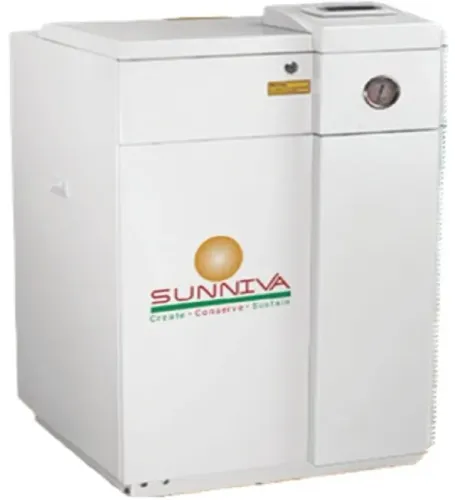
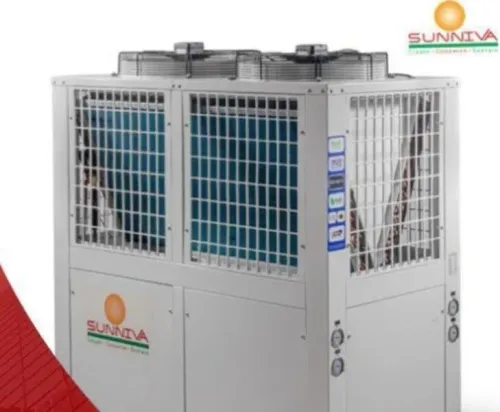
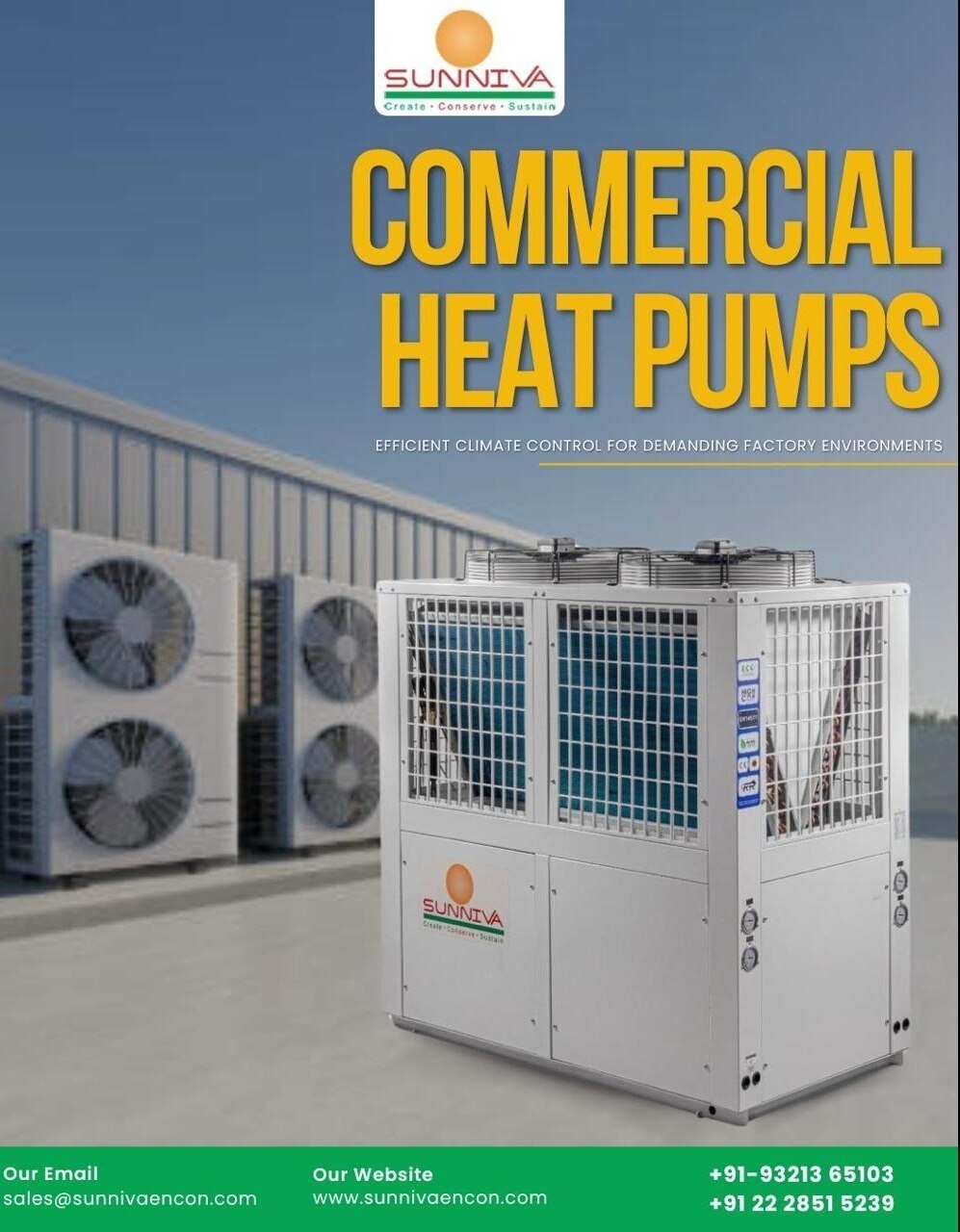
A commercial heat pump water heater proposal that omits those corrections is incomplete. Evaluate SUNNIVA HEAT PUMPS or any bidder against this measured commissioning scope, not nominal capacity alone.
Related product
 | Commercial Heat Pumps ₹500000 Commercial Heatpumps How it works This series serves centralised hot water systems where a large storage tank feeds multiple outlets. View product → |
Frequently asked questions
Where should you start troubleshooting uneven heating in a commercial heat pump system?
Start at the coldest outlet and trace upstream through the branch, circulation loop, storage tank, and heat pump. A normal leaving-water temperature does not prove that the remote branch receives design flow.
How do you distinguish tank stratification from circulation failure?
Measure temperatures at the top, middle, and bottom of the storage tank, then check flow and return temperatures on the circulation loop. A hot tank with a cold remote branch points to circulation or branch-flow failure; abnormal tank layers point to stratification or mixing problems.
How can you tell whether demand exceeds heat-pump capacity?
Compare the site’s hot-water demand and recovery period with the heat pump’s delivered output at the actual entering-water temperature, ambient condition, and setpoint. If the system cannot recover during the design peak, capacity or storage is insufficient.
What conditions should you check before repairing a commercial heat pump water heater?
Check air-side cleanliness and airflow, water-side strainers and pumps, electrical supply and protection, sensors and controls, and refrigerant circuit alarms or pressures. Record measured values before replacing components.
How should you compare commercial heat pump installation cost in India?
Compare quotes using the same heating capacity, storage volume, temperature setpoint, pipe lengths, insulation, electrical upgrades, controls, commissioning tests, warranty, and service scope. Separate equipment from civil, plumbing, electrical, and commissioning costs.