A 120°C outlet temperature does not prove that a system produces usable steam: steam pressure, dryness, flow, source conditions and total electrical input determine whether it will run your process. By the end, you will be able to define the required duty, compare a heat pump with boilers and heat-recovery options, and request performance evidence suitable for an Indian installation.
Key takeaways
- Define steam pressure, dryness, flow rate, and operating hours before requesting quotes.
- Reject hot-water-only systems when your process needs controlled saturated steam.
- Demand performance guarantees at your actual source and steam conditions.
- Compare electricity, water, installation, controls, and backup boiler costs together.
What Does “Steam Range” Mean for an Industrial Heat Pump?
“Steam range” means delivering usable saturated steam at a specified pressure, not merely heating water to a high temperature. An industrial high temperature heat pump producing 120–160°C hot water is not a steam range heat pump unless it also generates, separates, controls, and delivers steam at the required pressure and quality.
1. Specify the delivered medium first: hot water, pressurised water feeding a steam generator, or saturated steam produced directly. State pressure as absolute or gauge, steam quality, flow rate, and allowable superheat. Saturated steam is approximately 120°C at 2.0 bar absolute, 150°C at 4.76 bar, and 180°C at 10 bar.
2. Check the pressure boundary, not just the temperature label. At 180°C, the heat exchanger, receiver, piping, relief devices, flash tank, and steam separator belong to a pressurised steam system. A 120°C hot-water loop does not provide the same latent heat, pressure control, or clean steam quality.
3. Treat the loop as an unsuitable substitute when the process needs direct steam injection, steam stripping, humidification, sterilisation, drying, or a defined steam pressure at the equipment inlet. It can serve indirectly through a shell-and-tube or plate steam generator when separation, feedwater treatment, condensate return, and blowdown are properly designed.
4. Do not confuse mechanical vapour recompression with a steam range heat pump. MVR compresses existing process vapour; a heat pump can upgrade heat from effluent, cooling water, air, or another source. Compare the actual source and steam duty rather than accepting “ultra high temperature” as a technology definition.
Which Performance Data Must the Supplier Guarantee?
A supplier’s guarantee must state delivered steam duty at the coldest source temperature and lowest source flow you will encounter, not only at a nominal effluent condition. Request data for source temperature, sink temperature, flow rate, compressor speed and part-load operation; dilution or a production shutdown can otherwise trigger a trip or sharply reduce capacity.
Ask for:
- Heating capacity in kW, outlet temperature, pressure and mass flow at each test point.
- COP and total electrical input, including compressors, pumps, fans, oil systems, controls and steam-generation auxiliaries.
- Absolute or gauge pressure, plus source and sink inlet temperatures and the maximum temperature at which capacity remains guaranteed.
- Steam pressure, dryness fraction or quality, condensate-return temperature and stable operating duration.
| Claim | Evidence to demand | Why it matters |
|---|---|---|
| Steam-range output | Factory or site test at your pressure, temperature and flow | A temperature label does not prove usable steam |
| COP | Thermal output divided by total measured input | Compressor-only COP understates electrical demand |
| Capacity | Curve from coldest source and lowest flow to design peak | Nominal effluent data can exaggerate year-round duty |
| Steam quality | Measured dryness or quality at the outlet | Wet steam can damage equipment and disrupt production |
For an industrial high temperature heat pump in India, correct results for ambient heat, monsoon humidity, cooling-water temperature, water quality, voltage and frequency. Treat “ultra high temperature heat pump” as a marketing label unless the supplier identifies the delivered medium and test point.
A 1 MW unit at COP 3 needs about 333 kW compressor input before auxiliaries; size the connection from the guaranteed total.
How Should the Heat Pump Connect to a Steam System?
At 180°C, saturated steam is about 10 bar absolute, so the connection needs pressure-rated steam equipment, not a hot-water loop with a different label.
Specify whether the industrial steam heat pump produces steam directly, heats pressurised feedwater for a separate generator, or supplies a closed hot-water circuit; state pressure as absolute or gauge and define steam dryness.
Connect the package with:
- A shell-and-tube or plate heat exchanger that keeps refrigerant, process water and steam separated
- A flash tank or clean-steam generator sized for the required evaporation rate
- A steam separator, demister and drain system to prevent wet steam reaching the process
- A feedwater pump, treated make-up water, condensate-return line and controlled blowdown
- Pressure-rated piping, isolation valves, non-return valves and a bypass to a boiler or safe heat rejection path
- Independent pressure-relief valves, high-pressure and high-temperature trips, low-level cut-out and automatic shutdown on loss of flow
- A receiver or buffer tank when waste-heat temperature or flow fluctuates
Control the heat pump from steam pressure and generator level, not compressor discharge temperature alone. Put relief discharge where personnel cannot be exposed, and interlock the compressor with feedwater flow, separator level and downstream demand.
A steam range heat pump that only delivers 120°C water cannot safely claim to replace a 10-bar steam supply without this generator and pressure-control train. Size the electrical connection from guaranteed total input, including pumps, fans, controls and steam auxiliaries—not compressor COP alone.
How Do You Size and Compare the Complete Installation?
Calculate steam duty from the actual mass flow: duty equals steam flow multiplied by the enthalpy difference between delivered steam and incoming feedwater, plus blowdown and distribution losses. Use saturated-steam enthalpy at the specified absolute pressure, not a gauge-pressure temperature. Size for peak demand, minimum stable load and startup recovery.
For a 1 MW thermal industrial high temperature heat pump, COP 3 means about 333 kW of compressor input before auxiliaries. Compare the guaranteed total input, including source and condenser pumps, fans, oil pumps, controls and steam-generation equipment.
COP falls as source temperature drops and steam pressure rises, so model each operating point and calculate an annual weighted COP from actual hours. Do not transfer European test results directly to an Indian site.
| Option | Calculate output and efficiency from | Compare in the complete-installation case |
|---|---|---|
| Industrial steam heat pump | Guaranteed steam duty divided by total electrical input | Add grid upgrades, backup steam, water treatment, refrigerant safety, maintenance and outage risk; credit simultaneous cooling |
| Fuel boiler | Useful steam divided by fuel input | Include fuel, stack losses, emissions equipment, water, condensate recovery and standby capacity |
| Electric boiler | Useful steam divided by electrical input | Include transformer, switchgear, demand charges and full-load electricity cost |
| Waste-heat recovery | Recoverable source flow and temperature over operating hours | Check source fluctuation, fouling, buffer storage and the cost of lost heat elsewhere |
| Hybrid system | Heat-pump base load plus boiler or electric backup | Price controls, bypasses, staged compressors and the reduced backup-fuel requirement |
Use measured steam quality, mass flow, source temperature, sink temperature and auxiliary consumption within the same acceptance-test boundary.
What Should an Indian Buyer Specify Before Ordering?
State the plant conditions in the purchase specification, not just “steam range.” For an industrial high temperature heat pump in India, record source temperature and flow, monsoon humidity, cooling-water temperature, water quality, ambient design temperature, plant voltage and frequency, and whether every pressure is absolute or gauge.
Require corrected performance at those conditions; a European rating cannot be transferred directly.
| Requirement | Ask the supplier to provide | Reject the offer when |
|---|---|---|
| Site and electrical | Heat balance, connection load, protection scheme, total input including pumps, fans, controls and steam auxiliaries | Capacity uses compressor power only |
| Approvals | Responsibility matrix for the State Boiler Inspector under the Indian Boiler Regulations, 1950, electrical inspector, fire authority and PESO where applicable | Approval responsibility is left “to the client” |
| Refrigerant | Critical temperature, condensing pressure, discharge temperature, lubricant compatibility, decomposition limit, SDS, leak detection and recovery plan | It gives only a refrigerant name |
| Commissioning | Pressure and leak tests, calibrated instruments, interlock tests, operator training, as-built P&IDs and a witnessed test at design load | It promises factory data without a site test |
| Service | Preventive-maintenance schedule, critical spares, response time, remote diagnostics and backup steam arrangement | No local escalation or downtime plan exists |
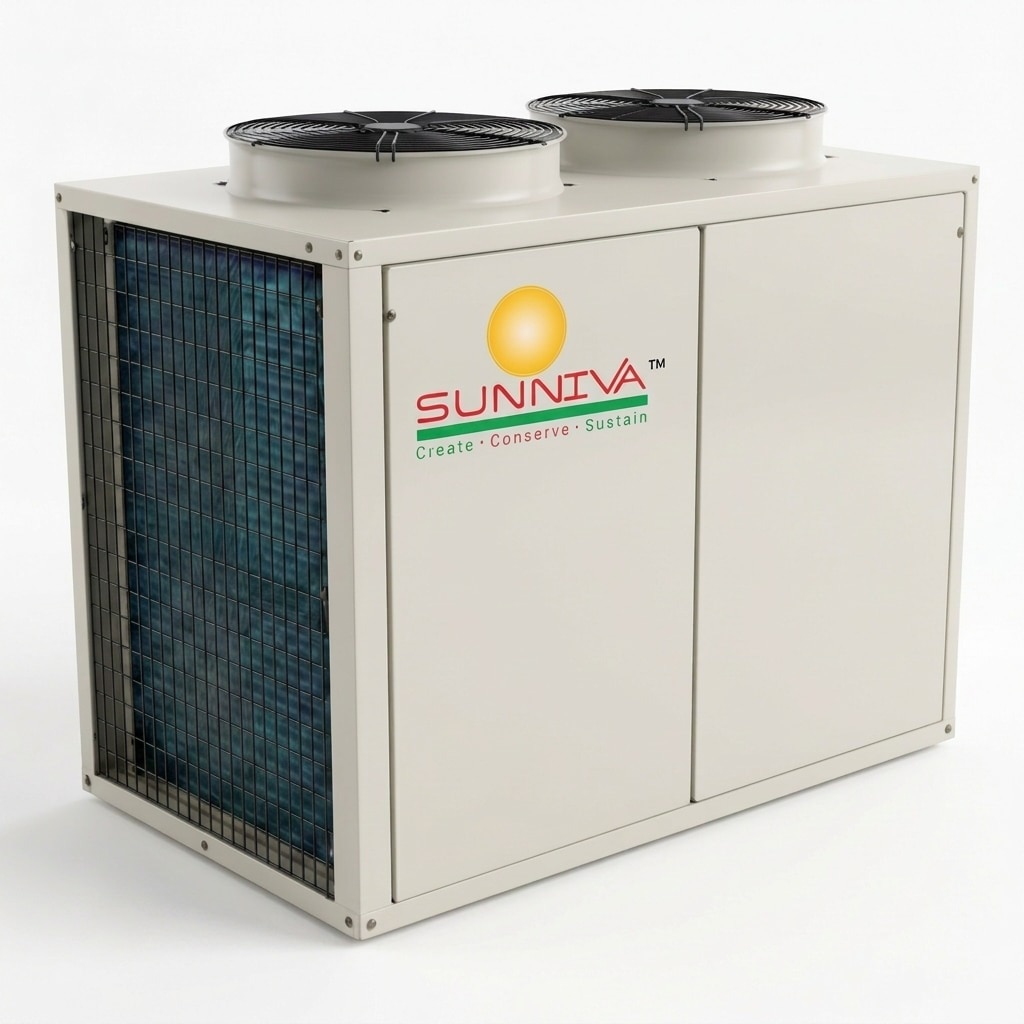
Specify delivered medium, outlet temperature, pressure and steam quality for an ultra high temperature heat pump; labels are not standard equipment classes. Confirm whether steam is produced directly or through pressurised water and a generator. SUNNIVA HEAT PUMPS should be assessed against the same evidence, including maintenance access and guaranteed output near maximum temperature.
Related product
Frequently asked questions
What does “steam range” mean for an industrial heat pump?
It means the system delivers usable saturated steam at a specified pressure, flow rate, and steam quality. Heating water to 120–160°C alone does not prove steam-range performance.
Which performance data must a supplier guarantee?
Request guaranteed steam capacity, outlet pressure, steam quality, source temperature, power input, COP, ambient conditions, part-load performance, and auxiliary electricity consumption.
How should a high temperature heat pump connect to a steam system?
Define whether the heat pump generates steam directly or heats a clean-water loop feeding a steam generator. Specify the steam separator, pressure controls, safety valves, condensate return, and connection to the steam header.
How should you compare a complete industrial steam heat pump installation?
Compare delivered steam cost using heat-pump electricity, source-side energy, water treatment, pumps, fans, controls, maintenance, installation, backup capacity, and the existing boiler’s fuel and operating costs.
What should an Indian buyer specify before ordering?
State steam pressure and flow, operating schedule, feedwater and condensate conditions, heat-source temperatures, site altitude, electrical supply, ambient range, water quality, compliance documents, commissioning tests, and warranty guarantees.
Related products
 | Ultra High Temperature Heat Pumps Ultra High Temperature Heat Pump ₹1200000 Ultra High Temperature Heat Pumps How it works This series pushes heat pump output into genuine steam territory. View product → |
 | High Temperature Heat Pumps ₹750000 High Temperature Heatpumps How it works Using R134a refrigerant and a higher condensing temperature than standard commercial units, this series lifts... View product → |
 | Super High Temperature Heat Pumps Super High Temperature Heat Pump ₹1250000 Super high temperature heat pumps are designed for demanding applications where standard heat pumps can’t deliver. View product → |